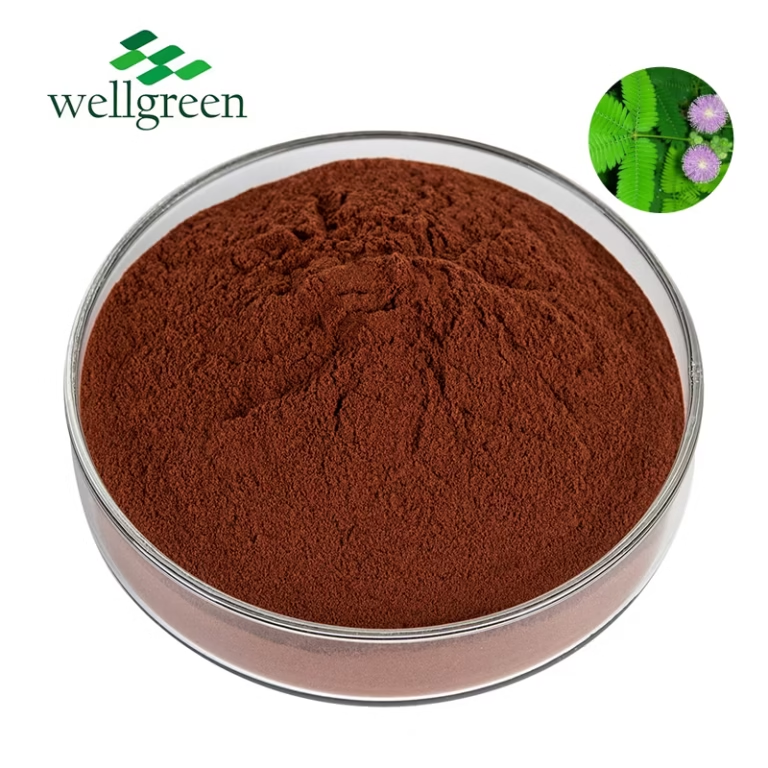
The ethnobotanical exploration of Mimosa Hostilis reveals a rich tapestry of traditional knowledge and cultural practices. For centuries, indigenous communities have utilized various parts of this remarkable species , particularly its root bark, for a multitude of purposes ranging from medicinal remedies to spiritual rituals.
- Indigenous healers have long employed Mimosa Hostilis to address a wide spectrum such as inflammation .
- Moreover, the plant's psychoactive properties have been explored in certain cultural contexts, leading to its use in ceremonial practices .
Recent scientific investigations have begun to illuminate the medicinal properties responsible for Mimosa Hostilis's purported effects. This ongoing research promises to deepen our knowledge into this ethnobotanically significant plant and its therapeutic benefits .
Unveiling the Chemical Potential of Mimosa Hostilis
Mimosa hostilis, a intriguing plant native to the tropical regions of the Americas, has attracted significant attention in recent years. This seemingly species possesses a trove of chemical elements with a extensive range of potential applications. From traditional medicinal practices to modern scientific, the analysis of Mimosa hostilis's chemical profile advances at an accelerated pace.
However, much remains to be unveiled about the full magnitude of its potential. Researchers are actively investigating into its distinct chemical constitution to leverage its properties for the improvement of human health and well-being.
Traditional and Modern Uses of Mimosa Hostilis Bark Extract
Mimosa hostilis bark has been utilized in various traditional ceremonies customs for centuries. Tribal communities often employed it as a potent element in spiritual rites. Traditionally, the bark was used to induce altered states of consciousness, promoting connection with the divine.
Modernly, mimosa hostilis bark has gained recognition for its potential therapeutic benefits. Researchers are studying its substances for their possible immune-boosting properties. The extract is often used in skincare products due to its antioxidant effects.
Furthermore, mimosa hostilis bark contains unique alkaloids that some persons utilize for their psychoactive effects. It is crucial to note that the ingestion of mimosa hostilis bark should be approached with care. Consulting a qualified medical professional is essential to understand potential risks and consequences.
The Pharmacology of Mimosa Hostilis: A Comprehensive Review
Mimosa hostilis, a treelike plant native to the Americas, has garnered considerable attention here in recent years for its pharmacological properties. The key constituent responsible for these effects is harmine, a potent copyright compound found in various indigenous cultures for spiritual purposes.
This in-depth review aims to examine the physiology of Mimosa hostilis, encompassing its interactions on the human organism, potential medical applications, and associated side effects. By synthesizing current research, this review delivers a comprehensive understanding of the complex nature underlying the pharmacological potential of Mimosa hostilis.
- Additionally, this review will shed light on the traditional significance of Mimosa hostilis within indigenous communities, providing a balanced perspective on its application.
- In conclusion, this review serves as a valuable resource for researchers, healthcare professionals, and individuals aiming to gain a enhanced understanding of the pharmacology of Mimosa hostilis.
Mimosa Hostilis: Ethnomedicinal Applications and Safety Considerations
Mimosa hostilis, a shrub indigenous to central America, has been widely utilized in ethnomedicine for its remarkable properties. Indigenous cultures employ the bark and root of this plant to remedy a variety of ailments, including skin conditions. While promising results point towards its efficacy in treating these disorders, it's crucial to approach the potential safety concerns associated with its use.
- Utilization of M. hostilis ought to be approached with caution due to its high levels of alkaloids, particularly harmala.
- Effects between M. hostilis and other medications can occur, potentially leading to undesirable outcomes.
- Guidance with a qualified healthcare professional is crucial before incorporating M. hostilis into any health regimen.
Cultivation and Harvesting of Mimosa Hostilis for Sustainable Practices
Cultivating Mimosa hostilis efficiently requires a deep understanding of its individual needs. Farmers should aim to create a optimal growing environment that provides adequate sunlight, well-drained soil, and suitable moisture levels. Traditional knowledge about the herb's requirements can be a valuable resource for cultivating vigorous plants.
Harvesting Mimosa tenuiflora should be conducted sustainably to ensure the long-term health of the ecosystem. Cultivators should select mature plants and extract only the required parts. Reducing damage to the plant during harvesting is crucial for growth.
Ethical harvesting practices include changing harvest sites, preventing over-harvesting, and implementing methods that encourage plant regrowth. By adhering to these principles, gatherers can ensure the continued availability of Mimosa hostilis for generations to come.